Planning Gutters for Two-Story Homes in Williston, Florida
Two-story homes ask more from a gutter system than a one-story ranch ever will. The roofline is higher, the water gains speed on the way down, and mistakes at the eaves tend to show up fast, whether that means splashback on siding, washed-out planting beds, or soggy areas that never seem to dry near the foundation. In a place like Williston, where heavy rain is part of life and humidity makes any lingering moisture more troublesome, gutter planning is not a cosmetic afterthought. It is part of how the house sheds water safely.
That point gets missed because gutters look simple from the ground. A straight run here, a downspout there, maybe a color that blends into the fascia. But on a two-story home, every small decision compounds. The height makes cleaning harder. The downspout discharge matters more. Corners, valleys, lanais, and pool enclosures create drainage pinch points. Even https://gutternotes977.readspirex.com/posts/questions-to-ask-a-gutter-contractor-in-alachua-county-before-starting-a-project choosing where the water ends up can make the difference between a neat yard and a recurring erosion problem.
I have seen homeowners focus almost entirely on the gutter profile and color, then get frustrated later when the real issue was runoff placement. Florida-friendly guidance has been consistent on that point for years: roof runoff should be directed away from the house and, when possible, into areas on the property that can absorb it, like turf or planted beds. That protects foundations, reduces erosion, and keeps stormwater from racing across hard surfaces.
Why two-story homes need more careful planning
The biggest difference is not just scale. It is force. When rainwater drops from a second-story roof edge, it carries more momentum than people expect. If the gutter is undersized, pitched poorly, or asked to feed too much water into a single downspout, overflows can happen where you least want them. On taller homes, those overflows may not even be obvious until staining shows up, mulch moves, or a lower roof section starts taking water from above.
A second challenge is access. Routine upkeep on a one-story home is already work. On a two-story house, the question of DIY gutter cleaning or hire a pro becomes much more than a budget call. Safety enters the picture quickly. Even homeowners comfortable on ladders often draw the line when they are dealing with upper-level eaves, wet leaves, and awkward corners. That matters because Florida homes do need regular gutter attention. Leaf litter and debris build up, and once a system is partly blocked, water finds its own route.
The third issue is layout. Many two-story homes in this part of Florida have mixed roof geometry. You may have a steep main roof dropping onto a lower section, a screened enclosure behind the home, or a front elevation with multiple peaks that all converge at one corner. Those designs can be attractive, but they create concentrated runoff zones. Planning gutters for those zones takes more judgment than simply wrapping the house with matching metal.
Start with where the water should go
This is the part homeowners often rush past. They think of gutters as the capture system, but the discharge plan is just as important. A downspout that dumps water right beside the house may solve one problem at the roof edge while creating another at grade. Florida guidance is clear that downspouts should direct runoff away from the home and into areas that can absorb water. That can mean turf, planting beds, rain-friendly landscape zones, or other pervious areas on site.
For two-story homes, I like to picture the rain path in reverse. Begin at the ground, not the eave. Where can this water leave the system without undermining the home or washing out the yard? Where will it go during a routine summer storm, and where will it go when the rain is harder and more sustained? Those are not always the same answer.
Homes with narrow side yards can be tricky. One downspout may empty into a strip of turf that handles ordinary rain well, then become saturated during a bigger event. In that case, the fix may not be more gutter. It may be redistributing flow so one side of the house does not take everything. Sometimes the right answer is an extra downspout, sometimes it is a better outlet area, and sometimes it is a landscape adjustment that slows or spreads the water.
Pool areas deserve special attention. Gutter drainage for pool cages can be surprisingly awkward because screened enclosures and surrounding hardscape often leave fewer absorbent areas nearby. If runoff overshoots or spills at the wrong point, it can create muddy edges, splash onto deck surfaces, or carve channels beside enclosure footings. Around outdoor living spaces, neat drainage matters as much as drainage capacity. You want water to disappear quietly, not announce itself every time a storm rolls through.
The questions worth settling before installation
A lot of frustration can be avoided if these points are discussed before fabrication or install day. Homeowners shopping for seamless gutters Williston FL often get focused on material and price, which is understandable, but these planning details usually have the bigger long-term impact.
- Where will each downspout discharge, and can that area absorb water without pooling near the house?
- Are there roof valleys or upper-to-lower roof transitions that concentrate runoff into a short gutter run?
- Does the home have a pool cage, lanai, or hardscape that limits where water can be routed?
- Will the system be maintained from the ground where possible, or will upper-story cleaning require professional access?
- If the property is in an HOA, are there color or appearance rules that need review before installation?
That last point gets overlooked more than you might think. Gutter colors for Florida homes are partly an aesthetic choice, but on HOA-controlled properties they may also be subject to appearance standards. Associations can regulate exterior appearance, though they cannot use those standards to deny installations that comply with the building code. In practical terms, it is smart to get color and style questions handled before materials are ordered.
Seamless gutters make sense, but they do not fix a bad plan
The phrase seamless gutters Williston FL shows up in a lot of searches for good reason. Fewer joints usually mean fewer places for leaks and separation over time. On a two-story home, reducing maintenance points is valuable because every repair and cleaning visit costs more effort when the work is high off the ground.
Still, homeowners sometimes assume seamless means worry-free. It does not. A seamless run can still overflow if it is carrying too much water, and it can still underperform if the pitch is off or the downspouts are placed poorly. Seamless construction improves the shell of the system. It does not replace thoughtful drainage design.
The same goes for accessories. I hear people lump all add-ons into one category, as if any screen or cover will magically end maintenance. Real life is messier. Some homes benefit from guards, some do not gain much, and some create new cleaning habits rather than eliminating old ones. If you have been comparing products and seeing searches like gutter guards Mount Dora FL, that tells you how common the question is across Florida markets. The useful way to approach guards is not as a cure-all, but as one variable in a maintenance strategy shaped by roof design, nearby trees, and access difficulty.
Metal roofs change the conversation a bit
When people research gutters for metal roofs Florida, they are usually trying to solve one of two concerns. The first is appearance, because metal roofs have a clean, crisp look and a clunky gutter setup can ruin it. The second is runoff behavior. Water can move quickly off many roof surfaces, and on a tall home that can make edge management more important, not less.
The planning principle stays the same: capture the water cleanly, move it down safely, and send it into a place that can absorb it on site whenever possible. What changes is the margin for sloppiness. On a home where runoff sheds fast, alignment and discharge details matter more. If there is a lower roof below an upper metal section, or a patio edge where spillover would be noticeable, that is worth discussing early.
I also encourage homeowners not to separate the roof decision from the gutter decision. Too often the roof is chosen first, then the gutters are treated as trim. On a two-story home, they are part of the same drainage system.
Cost is never just one number
When homeowners ask about gutter installation cost factors Florida, they are usually hoping for a neat price per foot. The problem is that two-story houses almost never behave like a simple price-per-foot job. Height alone changes labor and access. So does roof complexity. So do corners, lower roof tie-ins, obstacles like screens and landscaping, and the number of downspouts needed to keep water from concentrating in the wrong spots.
The honest answer is that cost comes from a cluster of factors rather than one headline number. A straightforward two-story rectangle with easy access is one thing. A home with multiple elevations, a screened rear enclosure, and tight side-yard discharge options is another. If a bid seems much lower than the rest, I would want to know what assumptions are built into it. Fewer downspouts can reduce price on paper while increasing runoff headaches later. Skipping extensions or discharge planning can do the same.
Repair costs follow a similar pattern. People searching gutter repair Hawthorne FL or gutter cleaning Dunnellon FL are often dealing with symptoms that trace back to earlier design shortcuts, not just wear and tear. A separated joint or recurring overflow at one corner may be a maintenance issue, or it may be the system telling you that the load at that location was underestimated from the start.
Common myths that trip up Florida homeowners
There are a few gutter myths Florida homeowners hear so often that they start to sound true.
One is that any gutter is better than no gutter. Not necessarily. A poorly placed system that drops water beside the foundation or onto a hard surface that sends it racing back toward the home can create a false sense of security. Gutters only help when they move water to a better place.
Another myth is that a bigger gutter automatically solves overflow. Capacity matters, but so do slope, downspout placement, and outlet conditions. If the discharge area cannot handle the volume, a larger channel upstream may simply move the problem.
A third is that maintenance can be postponed as long as water is still coming out somewhere. In Florida, partial blockage is often enough to redirect water where you do not want it. You may not notice until landscape erosion, staining, or persistent dampness appears.
Then there is the belief that second-story gutters can be ignored because they are out of sight. In reality, hidden upper gutters can create the costliest surprises because their failures affect lower roofs, walls, and entry areas before anyone sees the source.
Cleaning, safety, and the reality of two-story upkeep
I understand why homeowners debate DIY gutter cleaning or hire a pro. The work looks straightforward, and for a single-story home with easy access, some people handle it well. A two-story house changes the risk profile. Height, awkward ladder placement, roof pitch, and debris weight all make the task less forgiving.
There is also a quality question. Cleaning is not just scooping out leaves. A useful service visit checks whether water is flowing as intended, whether outlets are restricted, whether joints are opening up, and whether discharge areas are getting chewed up by runoff. On two-story homes, those observations can be as valuable as the cleaning itself.
That is one reason local service searches like gutter cleaning Dunnellon FL or gutter repair Hawthorne FL matter. Homeowners are not only buying labor. They are buying safer access and a set of eyes on a system that is hard to inspect from the ground. If the home has a pool cage, second-story rear gutters, or little room to ladder safely, hiring out often makes more sense than trying to wrestle with it yourself.
Color matters, but function should drive the choice
Gutter colors for Florida homes tend to be chosen for one of two reasons. Some homeowners want the gutters to disappear against fascia and trim. Others want a deliberate contrast that matches roofing or window accents. Both approaches can work, especially on taller homes where the line of the gutter is more visible.
I usually suggest making the color decision after the drainage layout is settled, not before. It is easier to be pleased with a color that hides in plain sight when the system is doing its job. It is hard to admire a perfect bronze or white finish if one corner keeps dumping water into a bed that washes out every rainy week.
For HOA properties, check appearance rules early. It saves delays and avoids the frustration of discovering that the preferred finish needs approval after everything else has been decided.
A practical year-round approach
Because Florida weather does not really grant a long off-season from moisture, I like maintenance plans that are simple enough to stick with. A year-round gutter checklist Florida homeowners can actually use should be short and realistic.
- Check visible gutters and downspout outlets after periods of heavy rain for overflow, splashback, or obvious blockages.
- Make sure discharge points still send water away from the house and into turf or planted areas that can absorb it.
- Look for signs of erosion, mulch washout, or persistent soggy soil near downspouts and lower roof corners.
- Schedule cleaning when debris builds up, especially if upper-story access is difficult or unsafe.
- Recheck drainage around pool cages, lanais, and hardscape edges where runoff problems tend to show first.
That routine sounds basic, but it catches most of the early warning signs that lead to bigger repairs later. The goal is not a spotless gutter system every week. The goal is controlled runoff.
What a well-planned system looks like in practice
On a well-planned two-story home, the gutters do not draw attention during a storm. Water enters cleanly, moves through the system without spilling over key edges, and exits in places that can handle it. The lawn is not getting trench-cut beside one downspout. The planting beds are not being blasted flat. The foundation area is not staying wet. If the property has a pool enclosure, the deck edge is not turning into a muddy border every time rain hits.
That kind of performance usually comes from ordinary decisions made carefully. Enough outlets. Sensible routing. Realistic maintenance. Thoughtful discharge. It rarely comes from one flashy product or one oversized component.
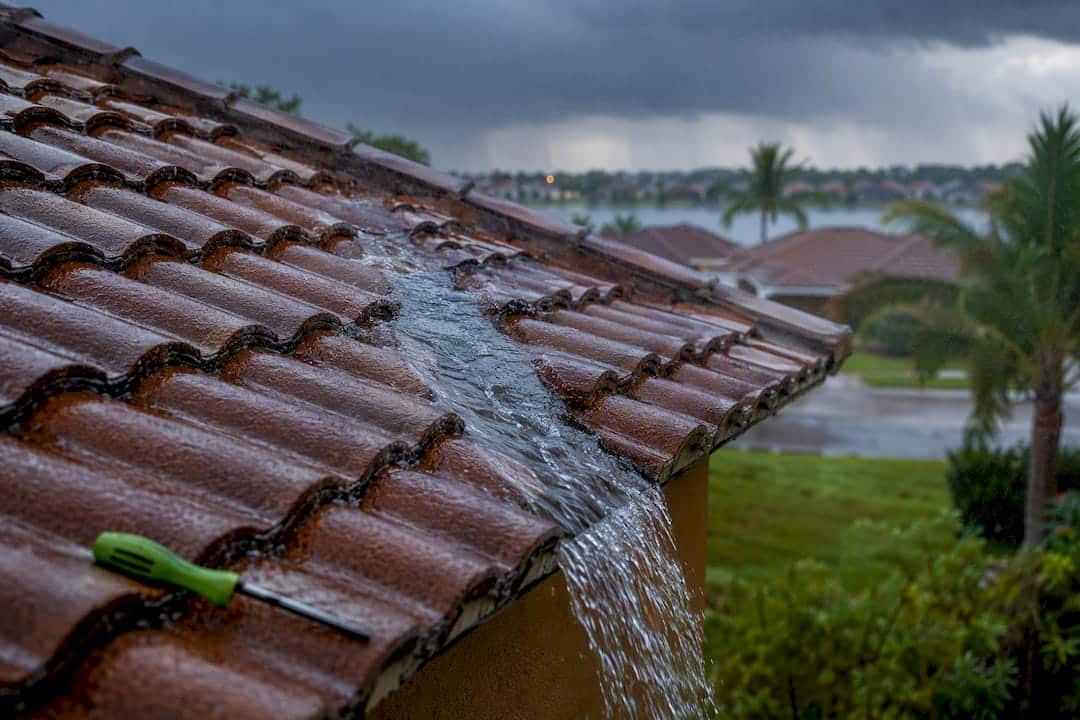
For Williston homeowners with two-story houses, that is the mindset worth keeping. Think beyond the roof edge. Follow the water all the way to the ground. Plan for the storms you know you will get, not the perfect sunny day when the house looks dry and easy. If the runoff has somewhere sensible to go, the whole property works better. If it does not, the problem simply moves from the eave to the yard, and then into the repair budget.