Gutter Guards for Pine Needles in Florida: What Homeowners in Silver Springs Should Know
If you live in Silver Springs, you already know that gutters in Florida have a harder job than people give them credit for. They are not just there to catch a little rain and move it off the roof. In Central and North Florida, they have to deal with long wet stretches, sudden downpours, tropical weather, humidity, and a steady mix of yard debris that can turn a good drainage system into a problem fast.
Pine needles are one of the biggest troublemakers in that mix. They look harmless when they are dry and scattered across the yard. Put them on a roofline, add oak leaves, a little grit, some roof runoff, and one hard summer storm, and they can pack into the exact places where water needs to move.
That is why so many homeowners start asking about gutter guards for pine needles Florida homes really need, especially in communities surrounded by mature trees. Silver Springs fits that picture. Plenty of homes here sit under pines, oaks, or both. A gutter system that works fine in a low-debris setting may struggle when needles keep arriving week after week.
The tricky part is this: gutter guards can help, but they are not magic. They do not replace judgment, maintenance, or proper gutter design. If you are deciding whether to add guards, replace old gutters, or just improve the setup you have, it helps to understand what actually causes failure in Florida conditions.
Why pine needles are such a headache here
Leaves are easy to picture in a gutter. They fall in, pile up, and block flow. Pine needles behave differently. They are thin, light, and persistent. Wind carries them easily. Water slides them toward outlets. When they get wet, they can mat together with leaf fragments and roof grit.
That matters because Florida’s rainy season does not always give a clogged system much time to fail gradually. A gutter can seem mostly fine in dry weather, then one hard rain shows you where the weak spots are. Water spills over the front edge, runs behind the gutter, or pools at one section. Once that starts, the problem is no longer just debris. It becomes a drainage issue.
Storm prep guidance in Florida consistently emphasizes clearing gutters, storm drains, needles, leaves, and other debris before severe weather. That advice is practical, not theoretical. Clogged gutters and clogged stormwater paths can be overwhelmed quickly when summer rain or tropical weather hits.
There is also a second issue homeowners often overlook. Debris that washes out of gutters does not simply disappear. Florida stormwater guidance warns against letting leaf litter and yard debris move into drains and waterways. In other words, keeping gutters clear is not only about protecting fascia and foundations. It is also part of keeping organic material where it belongs, on-site and under control.
What gutter guards can and cannot do
A good gutter guard is meant to reduce how much debris gets into the trough while still allowing water to enter and flow toward the downspouts. That sounds simple. In practice, pine needles test that balance more than broad leaves do.
Homeowners sometimes expect guards to create a maintenance-free system. That is usually where disappointment starts. Guards can cut down on the volume of material entering the gutter, but debris can still collect on top, around roof edges, or near valleys where runoff concentrates. Needles can also gather at transitions, corners, and downspout openings.
So when someone asks whether gutter guards are worth it in Silver Springs, my honest answer is usually yes, if the rest of the system is right and expectations are realistic. Guards are most useful when they are treated as one part of a drainage strategy, not the entire strategy.
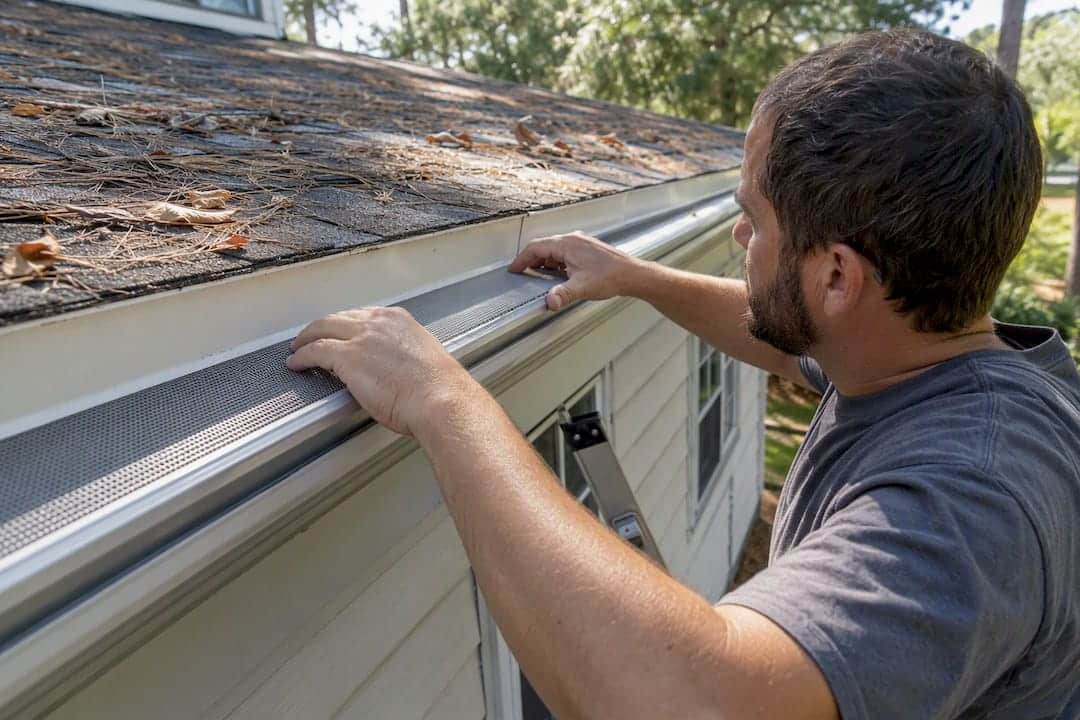
The rest of that strategy includes gutter sizing, downspout capacity, the path the discharged water follows once it leaves the downspout, and the condition of the existing gutter itself. A guard added to a poorly pitched or undersized gutter is a little like putting a better lid on a bucket with a hole in it.
The real question is often bigger than the guard itself
A lot of homes do not just need a product added on top. They need the whole drainage setup evaluated.
That is where conversations about gutter sizes for Florida homes become important. Homes in this region often face intense rainfall that can overwhelm systems that are too small, too flat, or poorly drained. Florida code materials make clear that gutters and downspouts must be sized and discharged in accordance with the applicable code, and exterior systems need to be securely fastened with corrosion-resistant fasteners. That may sound dry, but for a homeowner it boils down to this: water volume, attachment quality, and discharge location matter.
I have seen homeowners focus narrowly on debris control when the real issue was that the downspouts were not moving water away effectively. A guard can reduce clogs, yes, but if the downspout drainage Newberry FL homeowners ask about is handled poorly, the improvement may feel minor. The water still needs somewhere to go.
The same applies if the gutter body is aging out. On older homes, especially where sections have separated or sagged, the smarter move may be gutter repair Wildwood FL style service in one case, or full gutter replacement Gainesville FL homeowners would recognize in another. Guards make more sense when they are going onto a sound base.
Material and profile still matter in Florida weather
You do not need to become a gutter engineer to make a good decision, but it helps to know the basics. In this part of the state, aluminum gutters Central Florida homeowners choose are common for good reason. They are widely used, they can be formed into seamless runs, and code guidance allows metal systems when they are properly fastened.
Seamless gutters Ocala FL contractors install are often appealing because fewer joints generally mean fewer leak points along the run. That does not mean seamless automatically solves every issue, but it can reduce the number of places where drips, separation, or debris snags start.
Profile matters too. Many people are familiar with K-style gutters Lady Lake FL homes often have. They are common enough that homeowners may not even know the name, only the shape. The point is not that one profile is universally superior. The point is that the gutter shape, size, and outlet setup should work together with the roof area and local rainfall demands.
For homes under pines, I usually tell people not to shop by guard brochure alone. First ask whether the gutter itself is appropriate for the house. Then ask whether the guard complements that setup.
Silver Springs homes have a few local realities
Silver Springs sits in the broader pattern that affects much of this region. Heat, humidity, frequent summer storms, and tree cover all shape what happens at the roof edge. If your house has both pines and live oaks nearby, you are dealing with a changing debris mix through the year. Needles may be the headline issue, but oak leaves and acorns can complicate the picture.
That mix matters because different debris behaves differently when wet. Pine needles can weave together. Leaves can flatten and seal over openings. Acorns can lodge where flow narrows. Add algae-darkened roof runoff and organic buildup, and maintenance becomes less about one big seasonal cleaning and more about paying attention at the right times.
UF/IFAS maintenance guidance for stormwater systems notes that gutters and downspouts should be cleaned as needed and that organic buildup should be removed, especially in summer. That phrase, “as needed,” is more useful than it sounds. It acknowledges that tree cover, roof shape, and weather exposure vary from house to house. A heavily shaded home in Silver Springs may need much closer attention than a more open property a mile away.
Signs your current setup is not handling pine needles well
You do not need to wait for obvious damage before deciding a change is needed. Most problem gutters tell on themselves early if you know what to watch for.
- Water spilling over the gutter edge during moderate or heavy rain
- Needles piling near downspout outlets or roof valleys
- Damp or dirty streaks on fascia or exterior walls below the gutter line
- Sections that hold standing water long after a storm
- Frequent need for gutter cleaning even after guards were installed
If one or two of those sound familiar, the issue may be clogging, but it may also be pitch, sizing, fastening, or discharge. That is why a quick look from the ground is useful, but a thoughtful inspection is better.
Why some guarded systems still fail
When homeowners say, “I already have guards, and the gutters still overflow,” they are usually describing one of three situations.
The first is that debris is collecting on top of the guard surface rather than inside the gutter. The trough may be relatively clean, but water still cannot enter freely once a mat forms. The second is that the guard reduced intake enough that the gutter system works under ordinary rain but struggles in intense downpours. The third is that the gutter and downspout network was marginal to begin with, and the gutter services in Leesburg guard did not fix the underlying capacity problem.
This is where storm ready gutters Florida homeowners ask about should be understood as a system concept, not a marketing phrase. Storm readiness means the gutters are clean, attached well, sized appropriately, and discharging water where it will not create a new problem.
It also means the homeowner has a plan. If a tropical system is approaching, gutters should not be packed with debris from the last dry spell. Florida storm prep guidance is clear on that point. Needles, leaves, and roof debris should be cleared before bad weather arrives.
Cleaning still matters, even with guards
One of the most useful mindset shifts is to stop asking whether guards eliminate cleaning and start asking how they change cleaning.
Without guards, a homeowner may deal with direct interior buildup in the gutter trough. With guards, the work may shift more toward surface debris, outlet checks, and inspection after major storms. Either way, someone still has to look.
For some households, that is enough reason to install guards. If gutter cleaning Fruitland Park FL companies are coming out multiple times a year because nearby trees are relentless, reducing how much debris gets into the system can save hassle and make each service simpler. But it is still service, not zero service.
That distinction matters because people often compare the cost of guards against the fantasy of never thinking about gutters again. A fair comparison is between current maintenance demands and the likely maintenance demands after installation, along with any related upgrades to gutter size, pitch, or drainage.
When repair makes sense, and when replacement is smarter
There is no single answer here. If the existing gutters are structurally sound and the main issue is debris entry, adding a well-matched guard may be reasonable. If there are localized failures, gutter repair Wildwood FL style work might be enough. A loose section, a leaking joint, or a drainage tweak can make a noticeable difference.
If the system is undersized, aging, pulling away, or poorly laid out, replacement starts to look more practical. That is especially true when a homeowner is already considering seamless gutters Ocala FL providers offer, or evaluating aluminum gutters Central Florida installers commonly recommend for durability and low joint count.
Gutter replacement Gainesville FL homeowners consider often ends up being less about cosmetic upgrade and more about correcting old compromises. Maybe the house had a basic setup that was fine until nearby trees matured. Maybe additions changed roof runoff patterns. Maybe years of patching created a system that technically works, but only under ideal conditions.
A replacement is the right moment to revisit gutter sizes for Florida homes, downspout placement, and how discharged water moves away from the foundation or hardscape. If pine needles are the trigger for the conversation, the real benefit may come from getting the whole water path under control.
Questions worth asking before you hire anyone
Hiring well matters as much as product choice. Because gutter performance depends on sizing, fastening, and discharge, the installer’s judgment is part of what you are buying.
- Ask how they evaluate existing gutter size, slope, and downspout capacity before recommending guards
- Ask whether the current gutters are sound enough for add-on guards or whether repair or replacement should come first
- Ask how the system will discharge water away from the home, not just how debris will be screened out
- Ask what maintenance they expect after installation, especially under pine-heavy tree cover
- Ask whether fasteners and materials are appropriate for exterior Florida conditions and securely installed
That is the practical side of hiring a gutter contractor Florida homeowners can trust. You are not just buying a piece of metal or a cover. You are hiring someone to think through rainfall, debris, and drainage as one problem.
A quick word about yard debris and what happens after cleaning
One detail many homeowners miss is what to do with the debris once it comes out of the gutter. Florida guidance encourages keeping leaves and pine needles on-site as mulch rather than letting them wash away into drains or waterways. That is a simple habit with two benefits. It keeps organic matter out of stormwater flow, and it gives you a useful material for beds and bare soil areas if you want it.
That is especially relevant after a big cleanup before a storm. The goal is not just to remove debris from the gutter line. The goal is to keep it from ending up where runoff can carry it into places it should not go.
How I would think through the decision in Silver Springs
If I were looking at a typical Silver Springs home under pines, I would frame the decision like this.
First, is the current gutter system fundamentally sound? If yes, then guards may be a worthwhile improvement, provided the homeowner understands that some inspection and cleaning will still be needed.
Second, does the gutter system appear adequate for local rain and roof runoff? If not, that issue should come before or at least alongside guard selection. This is where gutter sizes for Florida homes and downspout drainage matter more than people expect.
Third, how severe is the tree debris load? A house with occasional needle drop is different from a house that sheds into the gutters almost continuously. The heavier the debris pressure, the less helpful generic promises become and the more valuable a careful on-site assessment is.
Fourth, what is the homeowner trying to solve? If the goal is fewer clogs and safer maintenance intervals, guards can help. If the goal is zero upkeep forever, that expectation needs adjusting.
That is the most honest answer I can give. Pine needles are persistent, Florida rain is unforgiving, and gutters do not get many second chances during a storm. A thoughtful system, whether that means repair, replacement, or adding guards, usually performs far better than a quick fix chosen off a flyer.
For homeowners in Silver Springs, the smart move is rarely the flashiest one. It is the one that respects the realities of this climate: strong rain, heavy organic debris, and the need for water to move off the roof cleanly and away from the house. When those pieces work together, gutter guards become useful. When they do not, the guards often get blamed for problems that started somewhere else.